Appointments : 855-346-5152
Learn About Mammogram
What is a mammogram?
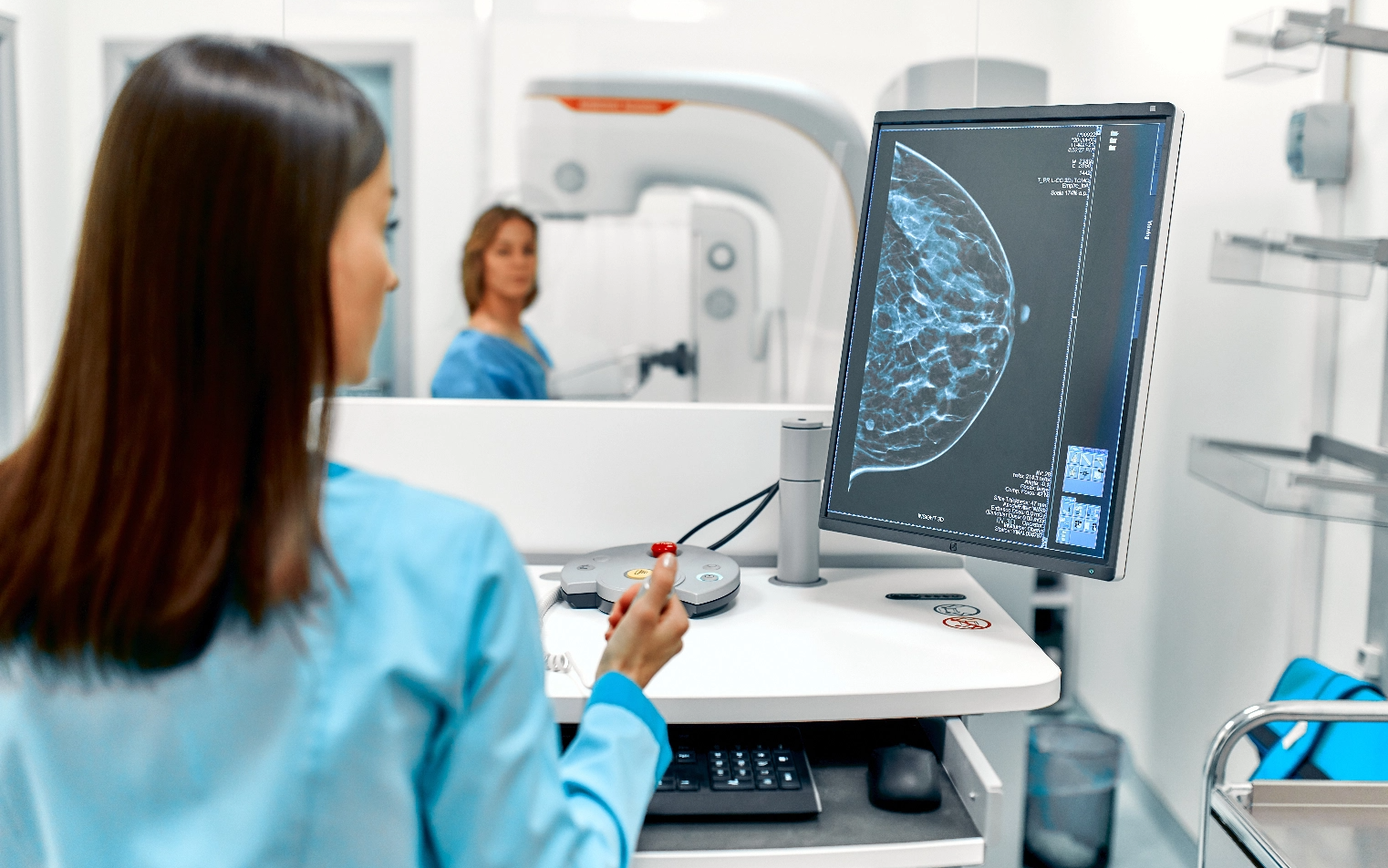
A mammogram is a type of X-ray specifically designed to examine breast tissue. It is a crucial screening tool for detecting breast cancer early, when it is most treatable.
Why are mammograms important?
Early detection of breast cancer is key to improving treatment outcomes. Mammograms can often detect breast cancer before it becomes palpable or causes symptoms. Regular mammograms can help identify abnormalities in the breast tissue, allowing for prompt medical evaluation and intervention.
Who should get a mammogram?
The American Cancer Society recommends that women ages 40 to 54 get annual mammograms. Women ages 55 to 74 can switch to mammograms every other year or continue annual screenings. The decision of when to start and how often to get mammograms should be made in consultation with a healthcare provider, considering personal risk factors and preferences.
What should I expect during a mammogram?
A mammogram typically involves two views of each breast: a side view and a top view. The procedure may feel slightly uncomfortable, but it is generally not painful. The technologist will provide instructions and support throughout the exam.
What if I have dense breasts?
Women with dense breast tissue may find it more difficult to detect abnormalities on a mammogram. In such cases, additional imaging techniques, such as ultrasound or MRI, may be recommended.
Are there any risks associated with mammograms?
Mammograms expose you to a small amount of radiation, but the benefits typically outweigh the risks. Modern mammogram technology has significantly reduced the radiation dose.
What should I do if I find a lump in my breast?
If you notice any changes in your breasts, such as a lump, thickening, or dimpling, it is important to consult your healthcare provider immediately. Do not wait for your scheduled mammogram.
Mammograms are an essential tool for breast cancer prevention and early detection. By scheduling regular mammograms and being aware of the signs and symptoms of breast cancer, you can take proactive steps to protect your health.
 Board Certified Radiologist
Blog & Healthcare News