Why Swapping a CT Scan for an MRI Costs More Than You Think
Medical imaging represents one of the most profound advancements in modern medicine, granting physicians the ability to see inside the human body without making a single incision. Yet, when patients receive a prescription for an MRI, the immediate reaction is often sticker shock. Faced with exorbitant out of pocket costs, a common question arises: Can a cheaper CT scan simply be substituted for an MRI?
The short answer is no. While both are marvels of diagnostic engineering, they utilize entirely different physics to visualize the body. Choosing the wrong modality to save money can lead to missed diagnoses, repeated tests, and ultimately, higher overall healthcare costs.
The Physics of Vision
To understand why these scans are not interchangeable, we must examine the fundamental science powering them.
Computed Tomography (CT)
A CT scan is essentially a sophisticated, three dimensional X ray. It uses a motorized X ray source that rotates around the patient, shooting narrow beams of ionizing radiation through the body. Detectors on the opposite side measure the radiation that passes through, and a computer compiles these measurements into detailed cross sectional slices. Tissues are differentiated by their radiodensity, which is measured in Hounsfield units. Bone appears bright white, air is black, and soft tissues fall into various shades of gray.
Magnetic Resonance Imaging (MRI)
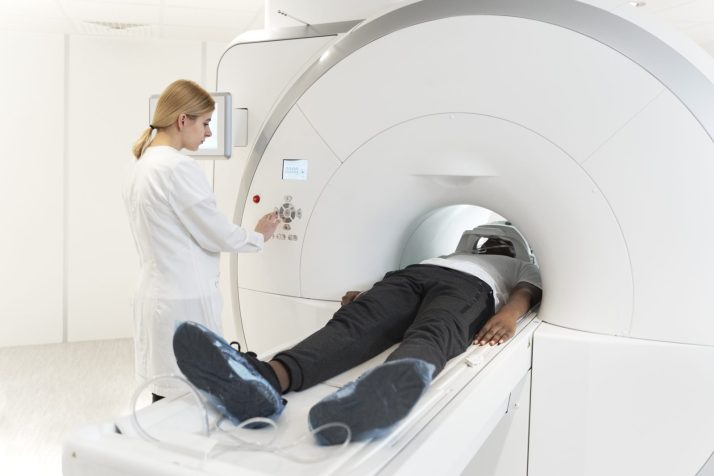
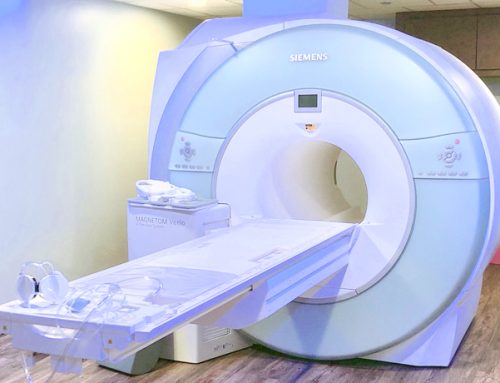
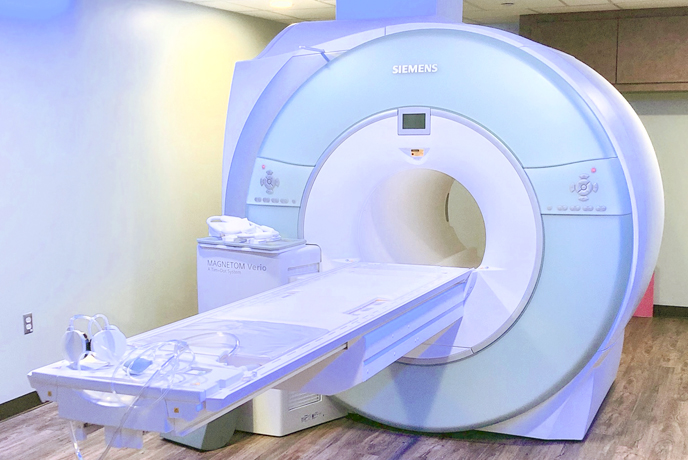
An MRI does not use ionizing radiation. Instead, it employs a massive superconducting magnet, measured in Teslas, to align the protons found within the water molecules of your body. Radiofrequency pulses are then fired at these protons, temporarily knocking them out of alignment. When the pulse turns off, the protons realign, emitting signals that are captured by receivers. Because different tissues have varying water contents and relaxation times, an MRI can produce exquisitely detailed images of soft tissues that would otherwise blend together into a uniform gray mass on a CT scan.
When Computed Tomography Excels
CT scans are the workhorses of emergency medicine. They are exceptionally fast, often completing in under five minutes, making them the superior choice for trauma patients or those who cannot remain still.
A CT scan is the preferred imaging modality for:
-
Acute trauma: Rapidly identifying internal bleeding, organ lacerations, or complex bone fractures after an accident.
-
Chest and lung evaluation: Detecting pneumonia, pulmonary embolisms, or early stage lung cancer, as air filled spaces are captured beautifully by X rays.
-
Skeletal imaging: Evaluating spinal fractures or complex joint issues where bone detail is paramount.
-
Patients with specific implants: Individuals with older pacemakers, cochlear implants, or certain metallic foreign bodies cannot enter an MRI machine safely due to the powerful magnetic field.
The Unmatched Detail of Magnetic Resonance
If CT is a rapid sketch, an MRI is a high definition oil painting of your internal anatomy. It is the gold standard for soft tissue evaluation. Because it maps the behavior of water molecules, it can differentiate between healthy and diseased tissue with incredible precision.
An MRI is the superior clinical choice for:
-
Neurological conditions: Evaluating brain tumors, multiple sclerosis plaques, aneurysms, and spinal cord compressions.
-
Musculoskeletal injuries: Diagnosing torn ligaments, such as an ACL tear, meniscus damage, or tendonitis, which are largely invisible on a CT scan.
-
Pelvic and abdominal organs: Detailed assessment of the liver, prostate, uterus, and ovaries.
-
Pediatric and frequent imaging: Because MRIs do not use ionizing radiation, they are the safer long term choice for children or patients requiring multiple follow up scans over time.
The Financial Anatomy of Medical Imaging
The advanced technology required to generate magnetic resonance makes MRIs significantly more expensive to purchase, maintain, and operate than CT scanners. A single MRI machine can cost upwards of three million dollars, not including the specialized, copper shielded room required to house it safely. These operational overhead costs are passed directly to the patient.
Without insurance coverage, the average cost of an MRI in the United States ranges from $1,200 to $4,000. In contrast, a CT scan is generally half the price, averaging between $300 and $3,000 depending on the complexity of the scan and whether an intravenous contrast dye is required.
However, pricing is highly dependent on geography and the specific type of facility. Take a major metropolitan market like Dallas, Texas, as an example. An MRI of the lumbar spine might be billed at $3,500 if performed at a hospital inpatient facility. Yet, the exact same diagnostic procedure, read by a qualified radiologist, could be completed for under $400 at an independent, outpatient imaging center just a few miles away.
Making Advanced Imaging Accessible
Navigating this fragmented healthcare marketplace can be overwhelming for uninsured or underinsured patients. When out of pocket costs present a barrier to critical diagnostics, patients need reliable avenues for cost containment that do not involve compromising their medical care by requesting the wrong type of scan.
This is where specialized networks step in to bridge the gap. RadiologyAssist operates as the largest nationwide program dedicated to making both MRIs and CT scans affordable for patients who need them. By negotiating directly with a vast network of accredited imaging centers across the country, the program secures significantly discounted, transparent pricing for cash paying patients. This ensures that individuals receive the precise diagnostic imaging their physician ordered, whether that is the rapid clarity of a CT or the deep tissue resolution of an MRI, without facing financial ruin.
Ultimately, your doctor selects an imaging modality based on the specific pathology they need to confirm or rule out. Substituting a CT for an MRI to save money is a false economy. If a CT cannot visualize the torn ligament or subtle brain lesion causing your symptoms, you will inevitably require an MRI anyway, effectively paying for both tests. The smartest financial strategy is not to change the prescribed test, but to change where and how you purchase it.
 Board Certified Radiologist
Blog & Healthcare News